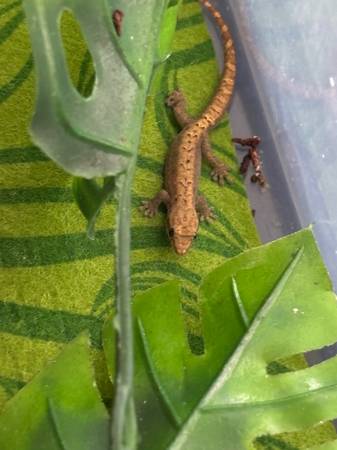
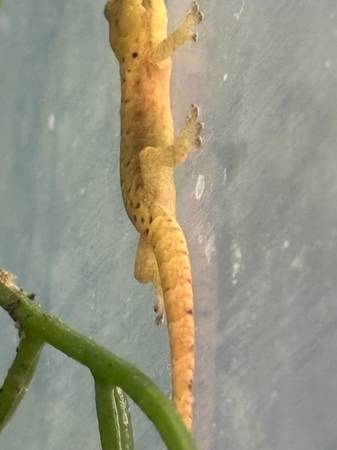
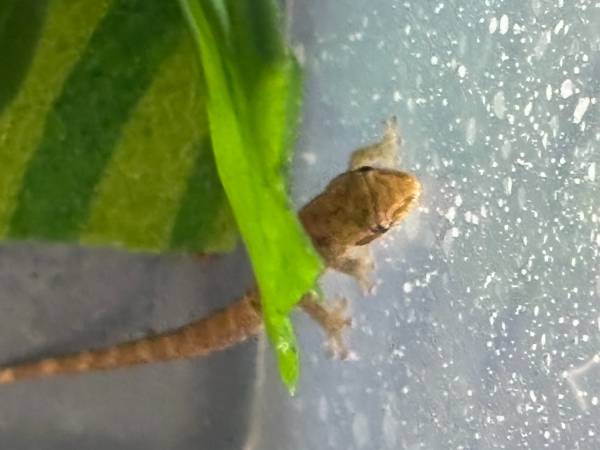
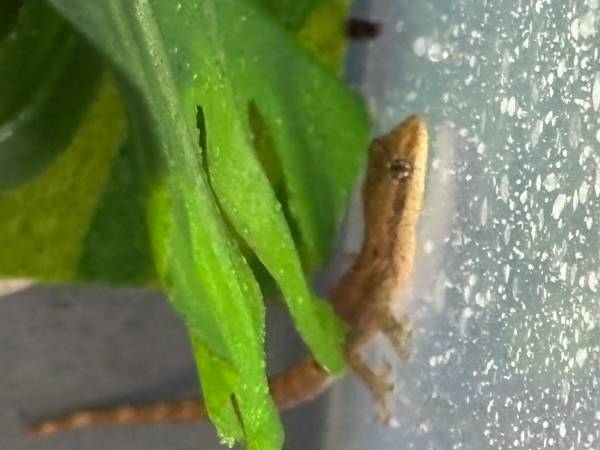
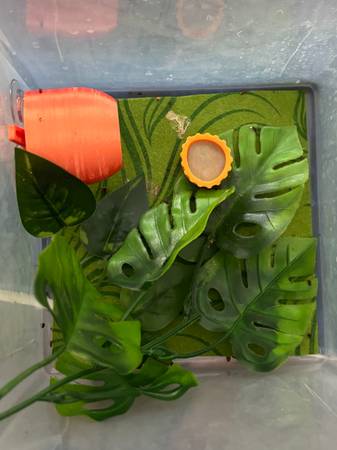
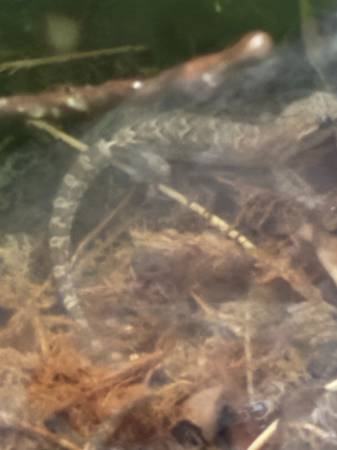
Rehoming three (3) cute young Mourning Geckos in temporary grow out enclosure. Rehoming fee of $75 includes current temporary enclosure, feeding cup & hide. pictures of examples.
Mourning geckos are small lizards, typically reaching a total length of 3 to 4 inches (about 7.5 to 10 cm). They grow to a maximum size of around 2.7 to 3.7 inches (7 to 9.5 cm), with half of their length being their tail.
Total Length: 3–4 inches (7.5–10 cm)
Maximum Size: Up to 3.7 inches (9.5 cm)
Snout-to-Vent Length: 1.5 to 1.9 inches (3.8 to 4.8 cm)
Care requirerments:
Mourning gecko requirements include a tropical terrarium with temperatures between (70-80F and high humidity (60-90%) maintained by regular misting. They need a social environment, so they should be housed in groups, and a tall, arboreal-style enclosure with plenty of climbing structures like vines and plants is ideal. A basking spot of about (85F) is necessary, and while UVB lighting is beneficial, it's not strictly required.
Enclosure Size: They are in a 9x5 temporary enclosure. They will be ready for a new home by Christmas. A 10 gallon terrarium at minimum but the higer the better
A minimum of (12x12x18) inches is suitable for a small group (2-3 adults), but larger is better, especially for a growing colony. They are arboreal, so an enclosure with more height than floor space is preferable.
Social grouping: Mourning geckos are social and do best in groups of two or more.
Decorations: Provide plenty of climbing opportunities with vines, branches, and plants to create a sense of security and territory.
Bioactive setup: A bioactive setup with a drainage layer and live plants is highly recommended to help with humidity and cleaning.
Security: The enclosure must be escape-proof, as even newly hatched geckos are very small and can get through tiny openings.
Main diet: These three have been eating Pangea Gecko diet and Wingless fruit flies.
Feed a high-quality powdered insect-based gecko diet, supplemented with live insects. Live insects: Offer small insects like fruit flies, crickets, or roaches. Water: They will get most of their hydration from the misting of the enclosure and from licking water droplets off surfaces and food. A water dish is not necessary.